LUCAS Drone Explained: How the US Copied Iran’s Shahed and Used It on Iran
The LUCAS drone is a cheap U.S. one-way attack drone reverse-engineered from Iran’s Shahed-136. Here is who makes it, its range and cost, the USS Santa Barbara launch and its use against Iran.
Choose Clash Report as a preferred source and see our reporting first in Top Stories.
- Arizona-based SpektreWorks builds the drone, a reverse-engineered copy of Iran’s Shahed-136.
- The littoral combat ship USS Santa Barbara launched one at sea for the first time on Dec. 16, 2025.
- U.S. Central Command confirmed its first combat use during the opening strikes on Iran on Feb. 28, 2026.
For years, U.S. warships fired costly missiles to shoot down cheap Iranian-designed drones. The Pentagon then decided to build a cheap drone of its own.
The result is LUCAS, short for Low-cost Uncrewed Combat Attack System. This guide explains what it is, how it compares with the Shahed, its use against Iran and where the program goes next.
What Is the LUCAS Drone?
LUCAS is a one-way attack drone, often called a kamikaze drone. It flies to a target and explodes on impact instead of returning home.
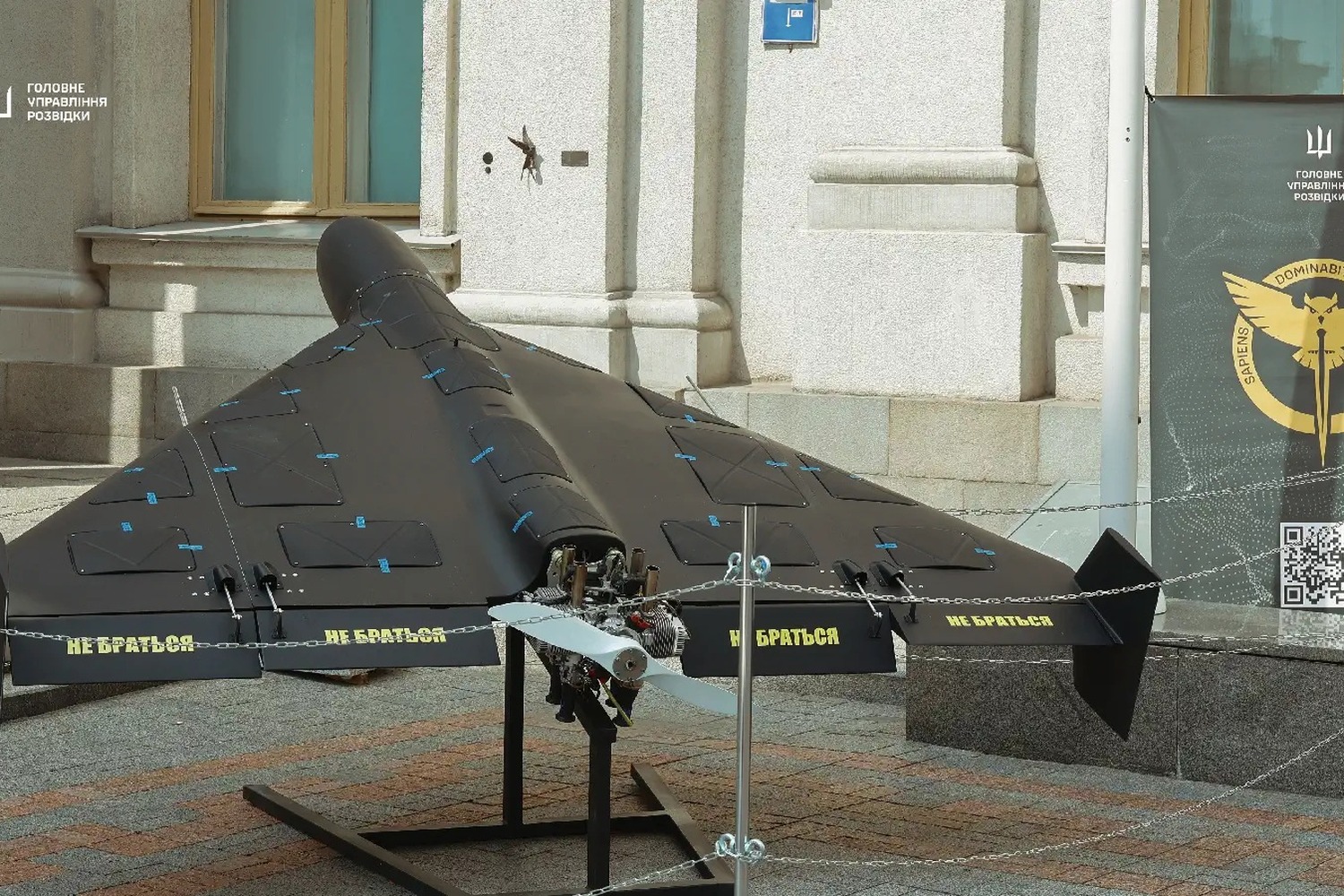
Military Times reports that it is a spinoff of SpektreWorks’ FLM 136, a target drone built to imitate the Shahed for counter-drone training. The Navy spells out the name as Low-cost Unmanned Combat Attack System.
- Maker: SpektreWorks, Arizona
- Type: long-range, one-way attack drone
- Design: Shahed-style airframe with a pusher propeller and a combustion engine
- Launch: catapults, rocket-assisted takeoff, and ground or vehicle launchers
- Unit cost: reportedly about $35,000
LUCAS vs Shahed-136
LUCAS looks much like the Iranian Shahed-136 that Russia has fired at Ukraine by the thousands. Both are simple, slow and cheap enough to launch in large numbers.
The FLM 136 on which LUCAS is based has a range of about 500 miles and a maximum payload of 40 pounds, according to Military Times. Its 180-pound maximum takeoff weight makes it much lighter than the Shahed.
Also read: Ukrainian Laser Downs Jet-Powered Shahed in World First
The bigger difference is cost math. A Shahed costs about $35,000 on average, while a PAC-3 interceptor costs an estimated $4 million, Military Times reported, so cheap drones can drain expensive defenses.
USS Santa Barbara LUCAS Drone Launch
On Dec. 3, 2025, U.S. Central Command announced Task Force Scorpion Strike, the U.S. military’s first one-way attack drone squadron, in the Middle East. Special operations personnel lead it.
Two weeks later, the Independence-class littoral combat ship USS Santa Barbara (LCS 32) launched a LUCAS from its flight deck in the Arabian Gulf. The Navy said it was the first launch of the drone from a ship at sea.
Task Force 59, the Navy’s unmanned systems unit in the region, carried out the launch. Vice Adm. Curt Renshaw called it “a significant milestone.”
LUCAS in Combat Against Iran
LUCAS made its combat debut on Feb. 28, 2026, in Operation Epic Fury, the U.S. strikes on Iran. Task Force Scorpion Strike used the drones.
Central Command did not say how many were used or which targets they hit. The strikes targeted Revolutionary Guards command sites, air defenses, missile and drone launch sites and airfields.
The top U.S. commander in the Middle East later praised the drones as “indispensable,” TWZ reported.
What Comes Next for LUCAS
The U.S. Army is now training troops to use long-range one-way attack drones. Its 7th Infantry Division added them to training at Joint Base Lewis-McChord, Washington.
Army officers see such drones hitting enemy warships and ballistic missiles in the Pacific and Europe. Cheap drones would save costly munitions for harder targets.
Shield AI’s Hivemind software is set to give LUCAS a swarming ability. Drones would share tasks, reroute around air defenses and keep flying if jamming cuts their datalink.
Why It Matters
LUCAS marks a shift in U.S. thinking. Instead of relying only on precision weapons such as the Tomahawk, the Pentagon now wants cheap strike drones it can buy and lose in large numbers.
It also turns an Iranian design against Iran. Clash Report earlier reported on evidence of U.S. kamikaze drone use in Venezuela, though officials did not name the system.
Frequently Asked Questions
What does LUCAS stand for? It stands for Low-cost Uncrewed Combat Attack System, also written as Low-cost Unmanned Combat Attack System.
Is LUCAS a copy of the Shahed? Yes, it was reverse-engineered from the Iranian Shahed-136, according to Military Times.
Who makes LUCAS drones? SpektreWorks, a company based in Arizona.
Has LUCAS been used in combat? Yes, starting with U.S. strikes on Iran on Feb. 28, 2026.
Kamer Kurunç
Kamer Kurunç is the Editor-in-Chief of Clash Report and has led the outlet for four years. Kamer sets the site's editorial direction and writes and edits coverage across the World and Defense sections, with a focus on the Russia-Ukraine war, NATO, Israel and Iran, Türkiye, North Korea and nuclear weapons. Kamer has written more than 1,100 articles for Clash Report.
Choose Clash Report as a preferred source and see our reporting first in Top Stories.