Pickaxe Mountain Explained: Iran’s Hidden Underground Site Near Natanz
Pickaxe Mountain is a deep tunnel complex Iran has been digging next to the Natanz nuclear site since 2020. Here is what may be inside, how deep it is and why Trump calls it his next target.
Choose Clash Report as a preferred source and see our reporting first in Top Stories.
- The site lies about 2 kilometers south of the Natanz enrichment plant and has been under construction since 2020.
- Analysts estimate the tunnels sit at least 80 to 100 meters under granite, deeper than most bunker busters can reach.
- It was not struck in the June 2025 war or the 2026 war, and Trump says it would be the first target if fighting resumes.
Most of Iran’s best-known nuclear sites have been bombed at least once since June 2025. One large tunnel complex near Natanz has not.
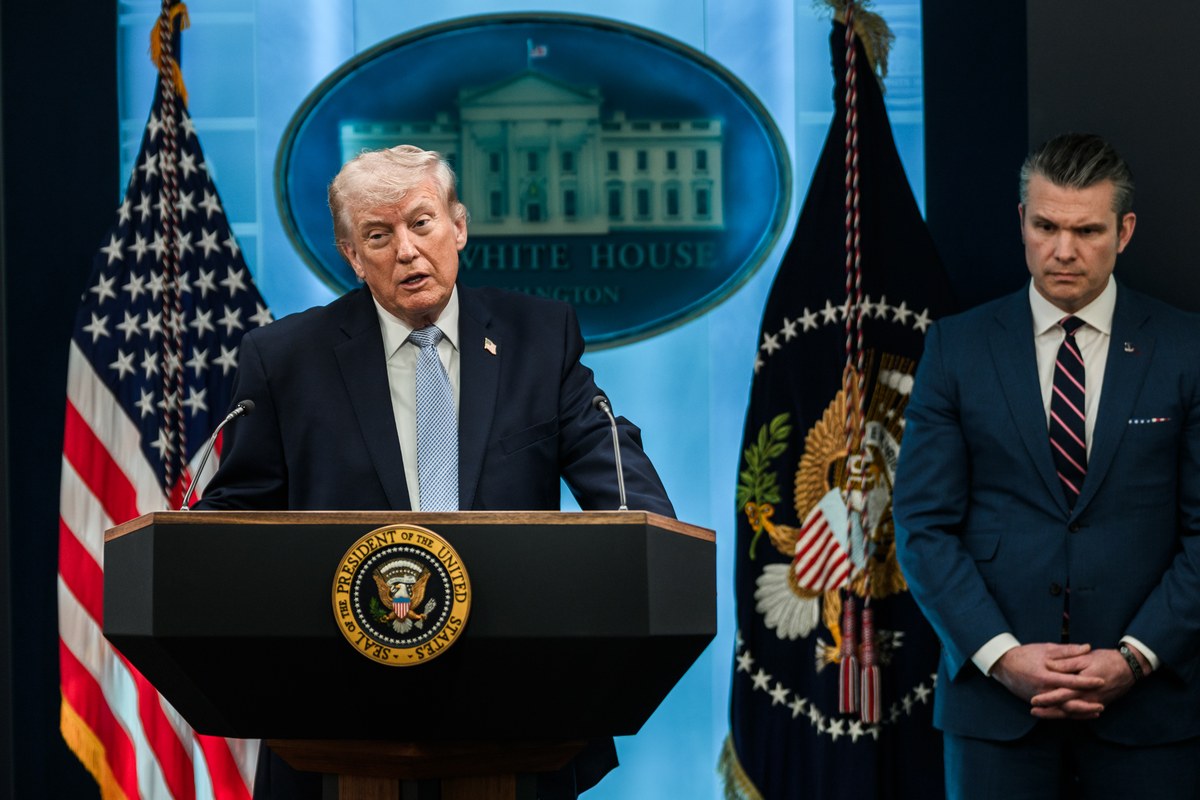
U.S. President Donald Trump said on Nov. 26, 2026, that Washington “would absolutely hit Pickaxe Mountain” if it struck Iran again. Clash Report covered his remarks here.
This guide explains what the site is, what may be inside and why it is so hard to destroy.
What Is Pickaxe Mountain?
Pickaxe Mountain is the nickname for Kuh-e Kolang Gaz La, a granite ridge just south of the Natanz nuclear complex in central Iran. “Kolang” means pickaxe in Persian.
Natanz itself sits about 225 kilometers south of Tehran, according to AP. It has been Iran’s main uranium enrichment center for two decades.
- Location: about 2 km south of Natanz, Isfahan province
- Construction began: fall 2020
- Peak of the ridge: about 1,600 meters above sea level, per the Institute for Science and International Security (ISIS)
- Entrances: two pairs of tunnel portals, at least two of them hardened with concrete and earth
- Estimated depth: at least 80 to 100 meters, based on satellite analysis
- IAEA access: none; Iran has reportedly not answered the agency’s requests
Why Iran Built the Pickaxe Mountain Iran Tunnels
In July 2020, an explosion destroyed an above-ground centrifuge assembly workshop at Natanz. Iran blamed sabotage, and the blast was widely linked to Israel.
Weeks later, Iran’s nuclear chief Ali Akbar Salehi announced a new assembly hall would be built inside the mountains near Natanz. Digging at Kolang Gaz La began that fall.
ISIS says the destroyed workshop was designed to assemble about 6,000 advanced centrifuges a year. The new halls were meant to replace it out of reach of saboteurs and airstrikes.
Also read: B61-11 Explained: The Nuclear Bunker Buster Behind Carlson’s Pickaxe Claim
What Could Be Inside
Nobody outside Iran’s program knows for sure. Schematics of the facility have never been published, and IAEA inspectors have not visited.
Analysts at CSIS list three main possibilities:
- A centrifuge assembly plant, as Iran said in 2020.
- An enrichment hall that could hold centrifuges producing highly enriched uranium.
- A storage site for equipment, centrifuges or nuclear material moved out of bombed facilities.
ISIS says the space is likely large enough for an enrichment plant and some weaponization work. Israeli intelligence reportedly believes Iran moved centrifuges and parts inside after the June 2025 war, according to the Wall Street Journal.
CSIS said in September 2026 that its imagery could neither confirm nor refute that claim. It found no sign the site was ready for enrichment.
How Deep Is Pickaxe Mountain?
Depth estimates come from measuring the dirt piles left by digging and the height of the ridge above the tunnel portals. Both methods have limits.
ISIS puts the western entrances about 100 meters below the ridge and the eastern ones about 150 meters below. The 50-meter gap may point to several levels inside.
For comparison, CSIS says even the GBU-57 Massive Ordnance Penetrator, the heaviest U.S. conventional bomb, would struggle to destroy a target this deep in granite.
Pickaxe Mountain Status in 2026
| Date | Development |
|---|---|
| Sept. 2025 | CSIS reports faster construction and a new security perimeter |
| July 13, 2026 | Trump tells Hugh Hewitt the U.S. will “take out” Pickaxe Mountain |
| July–Aug. 2026 | Imagery shows hardened portals, paved roads and the busiest activity on record |
| Oct. 7, 2026 | Eastern entrances still blocked by earth, western roads closed by berms |
| Nov. 26, 2026 | Trump says the U.S. sees no “real activity” but would hit the site |
ISIS said in October 2026 that the site appeared neither operational nor under major construction. It said the closed entrances fit reports that valuable equipment may be stored inside.
Could the US Destroy It?
ISIS argues an attack would likely copy earlier raids on Fordow and other tunnel sites. That means bunker busters aimed at ventilation shafts, plus strikes on entrances and power lines.
The group has identified a probable ventilation shaft near the eastern portals. CNN has reported the U.S. is also weighing the MOAB, a huge blast bomb rather than a penetrator.
Most analysts expect such a strike would seal the site rather than destroy it. ISIS says it would join Natanz and Isfahan in a state of “forced, monitored closure.”
Why It Matters
Pickaxe Mountain is widely seen as one of the last intact pieces of Iran’s nuclear program after two wars. Whatever is inside could decide how fast Iran can rebuild.
It also sits at the center of stalled U.S.-Iran talks. Washington has made the site a public threat, while the Revolutionary Guards guard the wider Natanz area.
Frequently Asked Questions
Where is Pickaxe Mountain? It is about 2 kilometers south of the Natanz enrichment plant in central Iran, roughly 225 kilometers south of Tehran.
Has Pickaxe Mountain been bombed? No major strike has been reported, and ISIS says only a vehicle near a spoil pile, likely linked to air defense, was hit.
Is Pickaxe Mountain enriching uranium? There is no public evidence it is operational, and satellite analysts say it appears unfinished.
Why is it called Pickaxe Mountain? The ridge is named Kuh-e Kolang Gaz La, and “kolang” means pickaxe in Persian.
Kamer Kurunç
Kamer Kurunç is the Editor-in-Chief of Clash Report and has led the outlet for four years. Kamer sets the site's editorial direction and writes and edits coverage across the World and Defense sections, with a focus on the Russia-Ukraine war, NATO, Israel and Iran, Türkiye, North Korea and nuclear weapons. Kamer has written more than 1,100 articles for Clash Report.
Choose Clash Report as a preferred source and see our reporting first in Top Stories.