What Is the IRGC? Iran’s Revolutionary Guard, Its Leaders and Power Explained
The IRGC, or Islamic Revolutionary Guard Corps, is Iran’s most powerful military force and answers only to the supreme leader. Here is how it is organized, who leads it, how it makes money and why many countries call it a terrorist group.
Choose Clash Report as a preferred source and see our reporting first in Top Stories.
- IRGC stands for Islamic Revolutionary Guard Corps, a force created in 1979 to protect Iran’s revolution rather than its borders.
- It runs Iran’s missile program, commands the Quds Force and the Basij militia, and controls a large share of the economy.
- The United States, Canada, Australia, the European Union and several other governments treat it as a terrorist or state-threat organization.
Iran has two militaries. The regular army, known as the Artesh, defends the country’s territory, while the Revolutionary Guards answer for the survival of the Islamic Republic itself.
That split explains much of what the IRGC does today, from firing ballistic missiles at Israel to policing protests at home and running construction companies.
What Does IRGC Stand For?
IRGC is short for Islamic Revolutionary Guard Corps. In Persian it is Sepah-e Pasdaran-e Enghelab-e Eslami, usually shortened to Sepah or Pasdaran, meaning “guardians.”
Western media also call it the Revolutionary Guards or simply the Guards. Its commander-in-chief is appointed by, and reports to, Iran’s supreme leader rather than the elected president.
Why Iran Created the Revolutionary Guards
Ayatollah Ruhollah Khomeini set up the force by decree on May 5, 1979, weeks after the shah fell. The new clerical leadership distrusted the shah’s army and wanted an armed body loyal to the revolution.
Khomeini also wanted protection against a coup like the one in 1953, according to the Council on Foreign Relations (CFR). Article 150 of Iran’s constitution later gave the Guards the task of safeguarding the revolution and its achievements.
The 1980–88 war with Iraq turned the militia into a real army, with its own ground, naval and air units. Many of the men who fought in that war went on to lead the Guards and to hold senior government posts.
How the IRGC Is Organized
The International Institute for Strategic Studies (IISS) puts the IRGC at upward of 190,000 troops, around half of them conscripts, CFR reported. It has five main branches.
- Ground Forces: the largest branch, based across Iran’s provinces and focused on internal security as well as conventional warfare.
- Aerospace Force: runs Iran’s ballistic missile and drone arsenal and its military space launches. Western estimates cited by CFR put its strength at about 15,000.
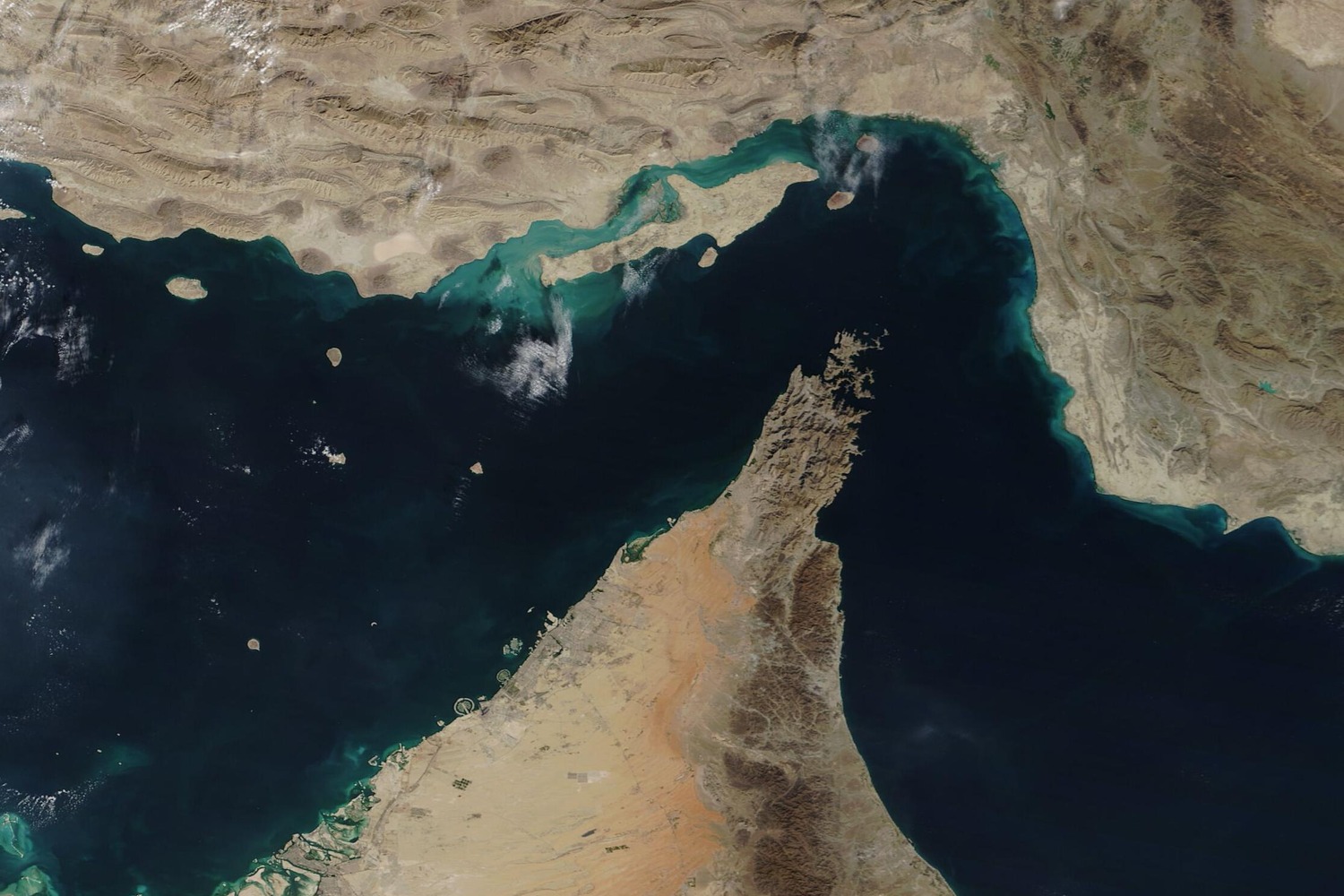
- Navy: separate from Iran’s regular navy, with roughly 20,000 sailors who patrol the Gulf and the Strait of Hormuz, often in fast attack boats.
- Quds Force: the foreign operations arm, which trains, arms and funds allied groups abroad.
- Basij: a volunteer militia brought under IRGC command in 2007. It says it can mobilize about 600,000 people.
The Guards also run their own intelligence organization, separate from Iran’s Intelligence Ministry. It has played a leading role in arresting dual nationals and dissidents, rights groups say.
Also read: Iran’s Missile Arsenal in 2026: Ranges, Types and How Many Are Left
Who Leads the IRGC in 2026?
War has emptied the top of the Guards twice in a year. Commander Hossein Salami was killed in Israeli strikes in June 2025, and his successor, Mohammad Pakpour, died in the U.S.-Israeli attack that opened the war on Feb. 28, 2026.
Ali Khamenei, the supreme leader who had shaped the Guards since 1989, was killed in the same strikes. His son Mojtaba Khamenei succeeded him and formally named a new command on Aug. 10, 2026.
- Commander-in-chief: Maj. Gen. Ahmad Vahidi, a former Quds Force chief, defense minister and interior minister. He is subject to an Interpol red notice over the 1994 bombing of the AMIA Jewish center in Buenos Aires, which Iran denies any role in.
- Deputy commander: Mostafa Izadi, formerly head of cyber and new threats at the Khatam al-Anbiya Central Headquarters.
- Quds Force: Esmail Qaani, in charge since January 2020.
- Aerospace Force: Majid Mousavi, appointed in June 2025.
- Navy: Rear Adm. Ali Azmaei, who replaced Alireza Tangsiri after Tangsiri was killed.
- Basij: Hossein Taeb, the former head of IRGC intelligence.
The Quds Force and Iran’s Regional Network
The Quds Force is the part of the IRGC most outsiders know about. Since the 1980s it has built ties with armed groups in Lebanon, Iraq, Syria, Yemen and the Palestinian territories.
Tehran calls this network the “axis of resistance.” Its best-known members are Hezbollah in Lebanon, Shiite militias in Iraq, the Houthis in Yemen, and Hamas and Palestinian Islamic Jihad in Gaza.
- Lebanon: Hezbollah was founded with IRGC help in the early 1980s and remains Iran’s closest partner.
- Iraq: The Trump administration blamed the IRGC for the deaths of 608 U.S. troops in Iraq between 2003 and 2011.
- Yemen: The IRGC has supplied the Houthis with weapons, training and intelligence, according to CFR.
- Syria: The Quds Force fought alongside Bashar al-Assad’s forces in the civil war, until his fall in December 2024 cost Iran its main land route to Hezbollah.
Its most famous commander, Qassem Soleimani, was killed by a U.S. drone strike in Baghdad in January 2020. Some of the groups act on their own, CFR notes, and Iran said it had no role in Hamas’s Oct. 7, 2023 attack on Israel.
The IRGC’s Economic Empire
The Guards entered business after the Iran-Iraq war, when they were tasked with rebuilding damaged infrastructure. Their engineering arm, Khatam al-Anbiya, has since become one of Iran’s biggest contractors, especially in oil, gas and construction.
BBC News called the IRGC a “business empire” in 2010, and Reuters described it as “an industrial empire with political clout” in 2019. Its interests reach into banking, shipping, telecommunications and imports.
How big that empire is remains disputed. Between one and two thirds of Iran’s gross domestic product is estimated to be controlled by the IRGC, an Australian parliamentary report said, citing the government’s statement of reasons.
Sanctions have often helped the Guards, analysts quoted by CFR say. As legitimate companies were cut off from world markets, IRGC-linked networks gained from smuggling, including oil sales to China.
Which Countries List the IRGC as a Terrorist Group?
Washington’s 2019 move was the first time the United States had designated part of another country’s government as a Foreign Terrorist Organization. Since then, the list of governments acting against the Guards has grown quickly.
| Country or bloc | Action | Date |
|---|---|---|
| United States | Quds Force sanctioned for supporting terrorism | October 2007 |
| United States | IRGC designated a Foreign Terrorist Organization | April 2019 |
| Saudi Arabia and Bahrain | IRGC added to terrorism lists | October 2018 |
| Canada | IRGC listed as a terrorist entity under the Criminal Code | June 2024 |
| Australia | IRGC listed as a “state sponsor of terrorism,” the first under a new law | November 2025 |
| European Union | IRGC added to the EU terrorist list, freezing its assets | February 2026 |
| Argentina | IRGC added to its terrorism register | March 2026 |
| United Kingdom | IRGC designated under new state threats powers | July 2026 |
The EU moved after the IRGC’s role in the deadly crackdown on protests in January 2026. Ministers reached political agreement on Jan. 29, and the Council formally listed the group on Feb. 19.
Australia said its intelligence agency had linked the IRGC to at least two arson attacks in 2024, on a Sydney restaurant and a Melbourne synagogue.
Britain stopped short of proscription under its terrorism law. Its July 2026 designation makes supporting the IRGC or taking money from it a crime punishable by up to 14 years in prison, but does not ban membership.
Tehran rejects the label and calls the Guards an official part of its armed forces. Under a 2019 law, it answers with reciprocal measures, most recently by designating Argentina’s navy and air force as terrorist groups.
The IRGC in the 2026 War
When the United States and Israel struck Iran on Feb. 28, 2026, the IRGC Aerospace Force led the response. Iran fired missiles at Israel and at Gulf states hosting U.S. bases, Reuters reported.
Reuters also reported in March, citing sources, that the Guards had taken the lead in wartime decision-making, pushing Iran toward a harder line. The main fighting ended with a ceasefire on April 8.
Since then, IRGC officials have said their forces are keeping the Strait of Hormuz closed to “the enemy and its allies.” In November, the Guards’ spokesman claimed missile production had not stopped, claims that could not be independently verified.
Why It Matters
The IRGC is the institution most likely to decide how Iran fights, negotiates and governs after the 2026 war. It holds the missiles, the regional alliances and much of the money.
For shipping, the Guards’ navy sits on the Strait of Hormuz, a chokepoint for about a third of the world’s seaborne crude oil, according to CFR.
For Western governments, the wave of designations has turned the IRGC from a sanctions target into a criminal one. That makes any future deal with Tehran harder to sell at home.
Frequently Asked Questions
What does IRGC stand for? Islamic Revolutionary Guard Corps. Iranians usually call it Sepah, and its members are known as Pasdaran, or guardians.
Is the IRGC part of Iran’s army? It is part of Iran’s armed forces but separate from the regular army, the Artesh. Both report to the supreme leader.
What is the difference between the IRGC and the Quds Force? The Quds Force is one branch of the IRGC. It handles operations and allied groups outside Iran.
Who is the IRGC commander now? Maj. Gen. Ahmad Vahidi, formally appointed by Supreme Leader Mojtaba Khamenei on Aug. 10, 2026.
Is the IRGC a terrorist organization? The United States, Canada, the EU, Argentina, Saudi Arabia and Bahrain list it as one, and Australia lists it as a state sponsor of terrorism. Iran rejects the designations.
Kamer Kurunç
Kamer Kurunç is the Editor-in-Chief of Clash Report and has led the outlet for four years.
Choose Clash Report as a preferred source and see our reporting first in Top Stories.