Iran’s Missile Arsenal in 2026: Ranges, Types and How Many Are Left
Iran’s missile arsenal is the largest in the Middle East, though two wars have worn it down. Here is what Iran has, how far each missile flies and how many may be left.
Choose Clash Report as a preferred source and see our reporting first in Top Stories.
- Estimates of Iran’s remaining ballistic missiles range from about 1,500 to 2,500, and U.S. officials say their own figures carry low confidence.
- Most of Iran’s missiles fly 300 to 2,000 kilometers, and the Revolutionary Guards say they no longer feel bound by a 2,000-kilometer cap.
- Iran is rebuilding from stored parts at about 50 missiles a month, a Western estimate says, roughly half its prewar pace.
Iran built its missile force because it could not match its rivals in the air. Sanctions starved its air force of modern jets for decades, so Tehran invested in rockets instead.
The CSIS Missile Defense Project calls the result the largest and most diverse missile arsenal in the Middle East. Two wars with Israel and the United States, in June 2025 and again from Feb. 28, 2026, have worn it down, but they have not eliminated it.
This guide sets out what Iran has, how far each missile flies, how many may be left and how they have been used. Figures are attributed throughout, because no outside government has published a confirmed count.
How Many Missiles Does Iran Have?
Nobody outside Iran knows for sure. Estimates differ in what they count: all ballistic missiles, only those that can reach Israel, or only those ready to fire.
| Date | Estimate | Source |
|---|---|---|
| 2022 | More than 3,000 ballistic missiles of all ranges | Gen. Kenneth McKenzie, then head of U.S. Central Command |
| June 2025, before the 12-day war | About 2,500 able to reach Israel | Israeli assessment, cited by the Alma Center |
| After the June 2025 war | About 1,000 to 1,500 | Published Israeli estimates, cited by Alma |
| Feb. 28, 2026, before the current war | About 2,500 | Israeli assessment |
| Early November 2026 | More than 1,700 able to reach Israel | Israeli security source, cited by Alma |
| November 2026 | At least 1,700 | Western official, cited by Bloomberg |
| November 2026 | 1,500 to 2,500 (low confidence) | U.S. intelligence, cited by The Wall Street Journal |
U.S. officials told the Journal that their range of 1,500 to 2,500 missiles carries low confidence. It is hard to tell missiles ready to launch from those in storage or in pieces.
Israel’s Alma Research and Education Center says Iran fired about 550 ballistic missiles at Israel in June 2025 and about 650 more after Feb. 28, 2026. Bloomberg Economics counts at least 2,200 ballistic missiles fired at all targets since Feb. 28, along with more than 4,900 Shahed drones.
Iran’s Ballistic Missiles by Range
Iran’s missiles fall into two groups. Short-range missiles can hit the Gulf states and Iraq, while medium-range missiles can reach Israel and parts of southeastern Europe.
| Missile | Class | Range (approx.) | Fuel | Notes |
|---|---|---|---|---|
| Fateh-110 | Short-range | 200–300 km | Solid | Operational; the base of a large family |
| Fateh-313 | Short-range | 500 km | Solid | Operational |
| Zolfaghar | Short-range | 700 km | Solid | Operational; used against ISIS in Syria |
| Qiam-1 | Short-range | 700–800 km | Liquid | Operational; Scud-based |
| Shahab-3 | Medium-range | 1,300 km | Liquid | Operational; the original long-range missile |
| Fattah-1 | Medium-range | 1,400 km (Iranian claim) | Solid | Maneuvering warhead; billed as “hypersonic” |
| Kheibar Shekan | Medium-range | 1,450 km | Solid | Unveiled in 2022 |
| Emad | Medium-range | 1,700 km | Liquid | Shahab-3 variant with a steerable warhead |
| Ghadr-1 | Medium-range | 1,950 km | Liquid | Shahab-3 variant |
| Sejjil | Medium-range | 2,000 km | Solid | Two-stage |
| Khorramshahr-4 | Medium-range | 2,000 km (Iranian claim) | Liquid | Iran claims a 1,500 kg warhead |
Ranges are from the CSIS Missile Threat database and the Wisconsin Project’s Iran Watch, which flag Iranian claims that have not been verified. Real range depends on the warhead, so a lighter payload can fly farther.
Britain, France and Germany told the United Nations in 2019 that their modeling put one Khorramshahr variant with a lighter warhead at about 3,000 kilometers. Iran has never confirmed that.
Also read: Iran lifted its 2,000-kilometer missile cap. Is Europe exposed?
Fattah, Kheibar Shekan and Khorramshahr
The newest missiles matter most, because they are harder to stop. Fattah-1 and Kheibar Shekan burn solid fuel, so crews can launch them within minutes instead of fueling them in the open.
Iran unveiled the Fattah-1 in June 2023 and called it hypersonic. Analysts at the International Institute for Strategic Studies say it is better described as a ballistic missile with a maneuvering warhead, not a true glide vehicle.
Iran first fired both missiles in large numbers on Oct. 1, 2024, when it launched about 180 ballistic missiles at Israel. Reuters reported that experts saw a larger share of the newer solid-fuel types than in Iran’s April 2024 attack.
The Khorramshahr is Iran’s heaviest missile. It is liquid-fueled and descended from a North Korean design, and it carries the largest warhead in the arsenal.
Cruise Missiles and Drones
Ballistic missiles get the headlines, but Iran also fields cruise missiles that fly low to dodge radar. CSIS lists the Soumar land-attack cruise missile at 2,000 to 3,000 kilometers and presumes it is operational.
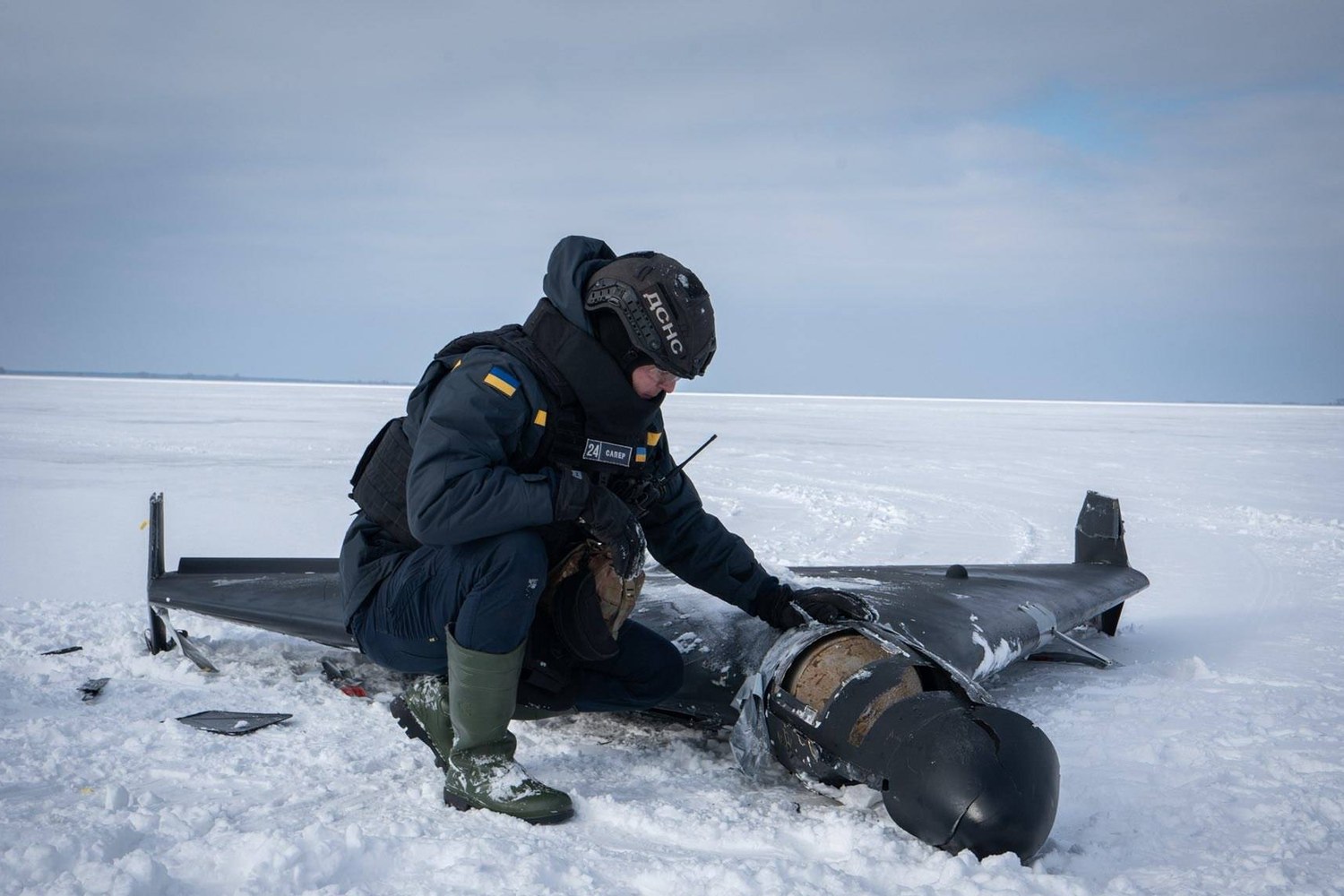
Then there are the Shahed one-way attack drones, which CSIS lists at 1,000 to 2,500 kilometers. They are slow and cheap, and they are often launched alongside missiles to soak up air defenses.
Those mixed salvos are the problem defenders face. Our Iron Dome explainer shows how Israel layers its interceptors to cope.
How Iran Has Used Its Missiles
| Date | Attack | Scale |
|---|---|---|
| June 2017 | Strike on ISIS in eastern Syria | Six missiles, per CSIS |
| Sept. 2019 | Abqaiq and Khurais oil facilities, Saudi Arabia | Drones and cruise missiles; Iran denied involvement |
| Jan. 2020 | U.S. troops at Al-Asad, Iraq, after Soleimani’s killing | Up to 22 ballistic missiles; over 100 U.S. troops with brain injuries |
| April 2024 | First direct attack on Israel | About 120 ballistic missiles plus drones and cruise missiles |
| Oct. 1, 2024 | Second attack on Israel | About 180 ballistic missiles |
| June 2025 | 12-day war with Israel | About 550 ballistic missiles at Israel, per Alma |
| Feb. 28, 2026 onward | War with the U.S. and Israel | At least 2,200 ballistic missiles at all targets, per Bloomberg Economics |
The trend is clear: each round has been larger than the last. Iran has also kept firing at U.S. bases and Gulf states, not only at Israel.
Missile Cities and Rebuilding
Iran stores and launches many missiles from tunnels it calls “missile cities.” In November the Revolutionary Guards showed off a new one, without saying where it is.
Open-source analyst Sam Lair has also tracked a new tunnel complex near Isfahan. He estimates its tunnels could sit 150 to 200 meters underground, which would make them hard to destroy.
Production is the bigger question. A Western estimate cited by Bloomberg says Iran is still producing about 50 ballistic missiles a month, mainly from stored parts.
The Foreign Policy Research Institute found underground activity at the Parchin, Khojir and Shahroud plants in October, but limited progress above ground. Alma says final assembly remains strong, while engines, raw materials and warheads are the weak links.
Why It Matters
Iran’s missiles are its main means of hitting back. As long as Tehran keeps several hundred that can reach Israel, U.S. bases and Gulf oil sites, any new round of fighting will be costly for all sides.
The arsenal also drives the debate in Washington and Jerusalem over whether to strike again. Supporters argue Iran is rebuilding, while critics note that two wars have not ended the threat.
For Europe, the lifted range cap is the new worry. If Iran fields missiles beyond 2,000 kilometers, capitals far from the Middle East would come within reach.
Frequently Asked Questions
How many missiles does Iran have in 2026? Published estimates run from about 1,500 to 2,500 ballistic missiles. U.S. officials say their own figures carry low confidence.
What is Iran’s longest-range missile? Officially the Sejjil and Khorramshahr, at about 2,000 kilometers. European modeling suggests a lighter-warhead Khorramshahr could reach about 3,000 kilometers.
Can Iran’s missiles reach Europe? They can already reach parts of southeastern Europe, including Greece, Bulgaria and Romania. Reaching Western Europe would need longer-range missiles than Iran has shown.
Does Iran have hypersonic missiles? Iran says the Fattah is hypersonic. Many analysts say it is a fast ballistic missile with a maneuvering warhead, which is not the same thing.
Can Iran’s missiles reach the United States? No. CSIS says Iran has not tested or deployed a missile that can strike the United States.
Kamer Kurunç
Kamer Kurunç is the Editor-in-Chief of Clash Report and has led the outlet for four years.
Choose Clash Report as a preferred source and see our reporting first in Top Stories.