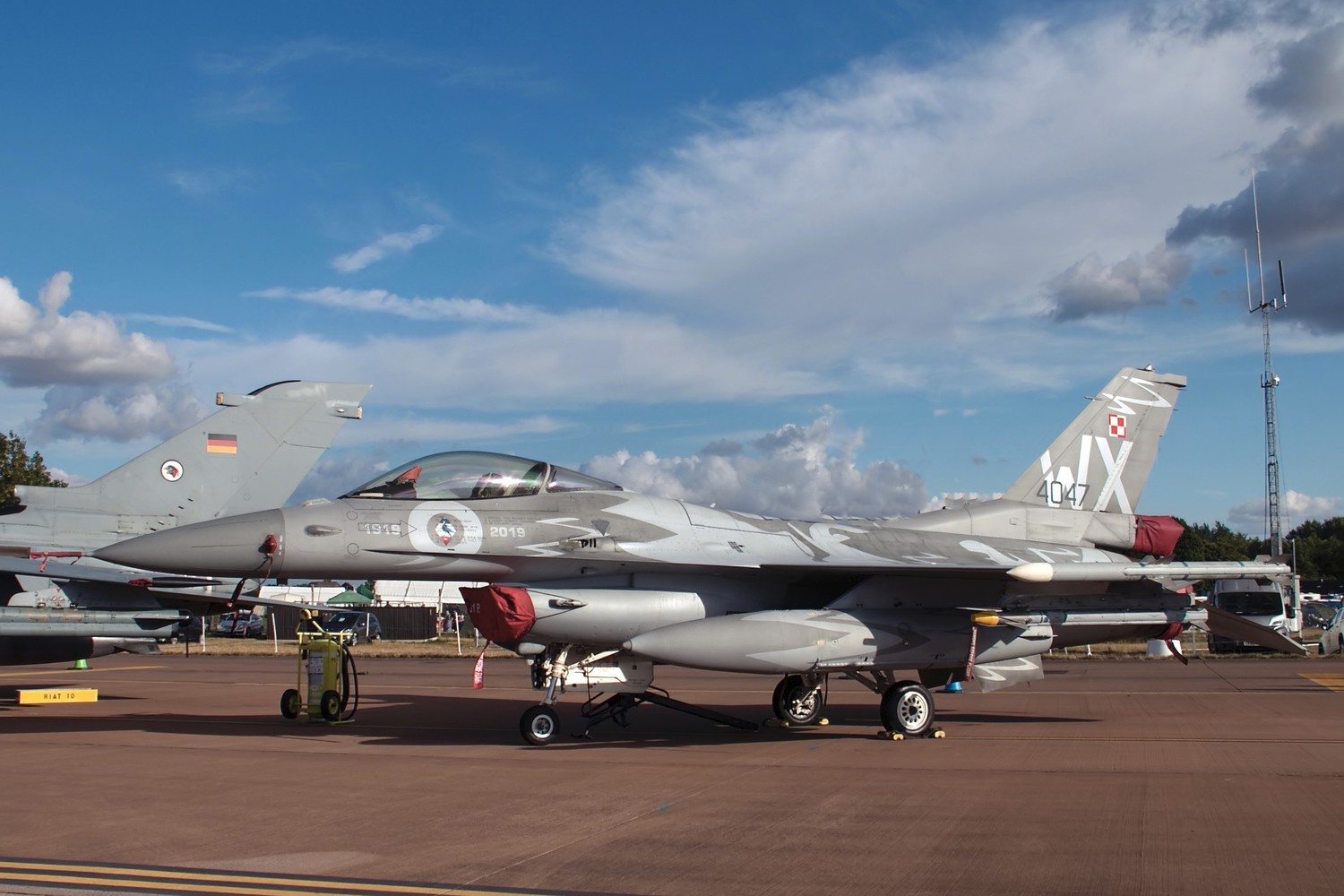
Poland Plans No-Fly Zone Along Eastern Border to Bolster NATO Flank
Poland is preparing a no-fly zone along its eastern border to help pilots identify and shoot down intruding objects, Deputy Defense Minister Cezary Tomczyk said. It could take effect in late December.
Choose Clash Report as a preferred source and see our reporting first in Top Stories.
- Poland is preparing a no-fly zone along its eastern border, reaching from a dozen to several dozen kilometers inland, Deputy Defense Minister Cezary Tomczyk said.
- The government wants the ordinance to take effect in late December or early January.
- Tomczyk said the zone would help Polish pilots identify and, if needed, shoot down aerial objects entering from the east.
Tomczyk announced the plan at a press briefing on Wednesday, after Russian missiles and a drone violated Polish airspace in recent days.
“A no-fly zone is needed in the east of the country, extending a dozen to several dozen kilometers from the border,” he said, according to European Pravda.
How the Zone Would Work
Tomczyk said the zone is needed to support “positive identification,” a procedure Polish pilots now use instead of visual identification. It lets a pilot decide based on “information from radar, allies, altitude and speed,” Defence24 reported.
“When a Polish fighter pilot knows that an aircraft is entering Polish airspace, for example from Ukraine, is flying at a particular altitude and speed, and enters the no-fly zone, and there is radar coverage, that provides grounds for shooting it down,” he said, according to Defence24.
“An ordinance is already being prepared by the government,” Tomczyk told reporters, The Straits Times reported, citing AFP. He called it “an additional factor for the armed forces.”
Tomczyk did not specify the zone’s exact boundaries or which civilian flights or drones it would restrict.
Also read: Poland Asks NATO to Weigh Shooting Down Russian Missiles Over Ukraine
NATO Cool on Strikes Over Ukraine
Asked whether allies could shoot down Russian missiles over Ukraine, Tomczyk said, “NATO is in no way in favour of this. It would create numerous complications,” Defence24 reported.
He said any decision on airspace over Ukraine “must always be made by all of NATO.”
Recent Incursions
Three Russian missiles violated Polish airspace during a large-scale Russian attack on Ukraine on Nov. 20, European Pravda reported.
On Nov. 24, officials said a Russian reconnaissance drone briefly entered Polish airspace during an overnight attack on Ukraine, according to The Straits Times.
Tomczyk said protecting NATO’s eastern flank is “a very important issue,” citing the East Shield program and fighter patrols.
Earlier Restrictions
After Russian drones entered Poland in September 2025, the air navigation agency PANSA imposed a restricted zone, EP R129, along the borders with Belarus and Ukraine.
It banned civilian drones at all times and all non-military flights at night, through Dec. 9, 2025. That restriction relied on a regulation limiting such bans to three months.
Why It Matters
A standing zone would give Polish pilots clearer grounds to fire on objects entering from the east.
It would also extend Poland’s tougher posture after allies balked at intercepting Russian missiles over Ukraine.
Kamer Kurunç
Kamer Kurunç is the Editor-in-Chief of Clash Report and has led the outlet for four years.
Choose Clash Report as a preferred source and see our reporting first in Top Stories.